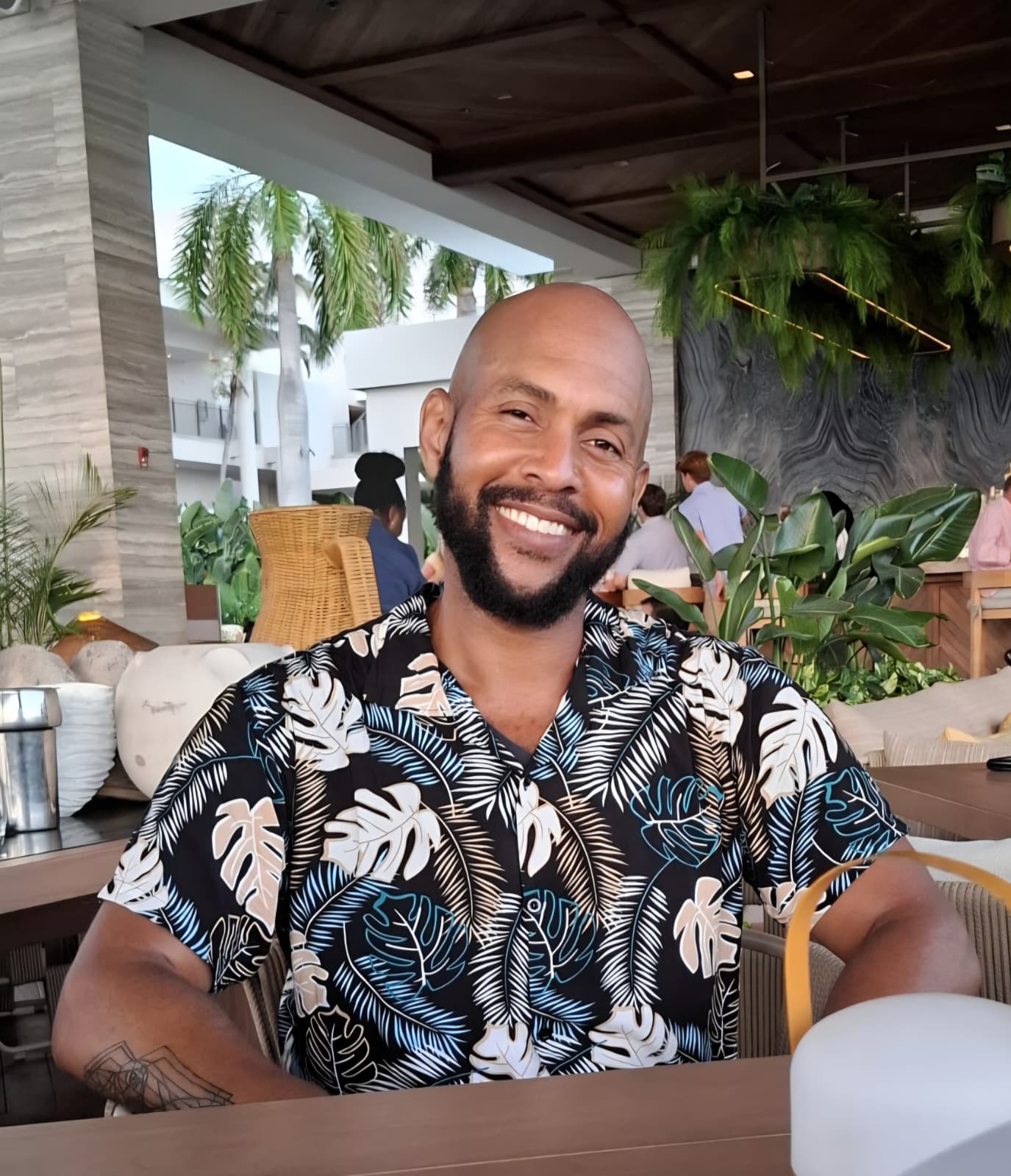
Actor. Coach. Dharma practitioner.
I am Shane Warren Jones. What brought me here was not a pivot or a plan. It was accumulation: twenty years of living inside other people's stories, learning what makes a human being hold together or come apart, and eventually turning that attention toward my own life with the same rigor I had given to the work.
I grew up between worlds. Born in Canada, shaped by formative years in the Emirates, where life also took me through Asia, Europe, and Africa, before landing in the United States. The ATCK experience is not a resume line. It is the texture of daily life: the code-switching, the rootlessness, the quiet grief of leaving places that became home, the strange fluency that comes from learning to read rooms across cultures before you could name what you were doing.
I carried that experience into twenty years of professional performance across film, television, and theatre. The stage became the place where I learned what it means to hold complexity without collapsing it, to be fully present under pressure, and to tell the truth through a character. It was also where I learned to explore emotional terrain safely, building empathy, emotional precision, and the capacity to stay present with intensity without being consumed by it.
In parallel, years of personal training, nutritional coaching, movement instruction, and martial arts practice built a different kind of knowledge. The somatic intelligence in this practice was earned through my own movement, repetition, and lived discipline, and deepened through the particular craft of teaching others how to inhabit their bodies with precision.
The dharma practice came alongside all of it. Long-term dharma practice rooted in Buddhist principles. 20+ years of daily contemplative practice. Japanese philosophical principles: Ikigai, Kaizen, Kintsugi, Wabi-Sabi, Mono No Aware, Zen, Ma. These were not decorations. They were the architecture that held everything else together when the performing life, the cross-cultural life, and the relentless adaptation started to cost more than they returned.
The Flow of the Phoenix exists because I needed it first.
The aim was never a better strategy or a more optimized life. It was a life that feels true from the inside out.
That same cross-cultural foundation drives Universal Engine Entertainment (UEE), the artist-driven production company I founded to develop and produce stories from the in-between: narratives centering BIPOC and globally mobile voices across screen, stage, and transmedia. APAC-rooted, craft-first, non-extractive. The stories UEE tells and the lives this coaching practice serves are two dimensions of the same work. Both exist because the experiences of people who live between cultures deserve to be held with depth and care, whether through story or through sustained practice.
Most people who come to this work are not broken. They are fragmented. There is a difference. Broken implies something went wrong. Fragmented means the pieces are all there: the intelligence, the discipline, the desire. They have just never been held in the same room at the same time.
The work is not repair. It is coherence. Coherence is not aimed at peak performance or optimization. It is aimed at something quieter: the experience of being at home in your own life. Not the life you are performing or the one you are building toward, but the one you are actually living, in this body, with this history.
That is what integration makes possible. Not a better version of yourself, but the one that was always there. The self that existed before the adaptation began.
A symbol you live, not one you borrow. A flow you move with, not against.
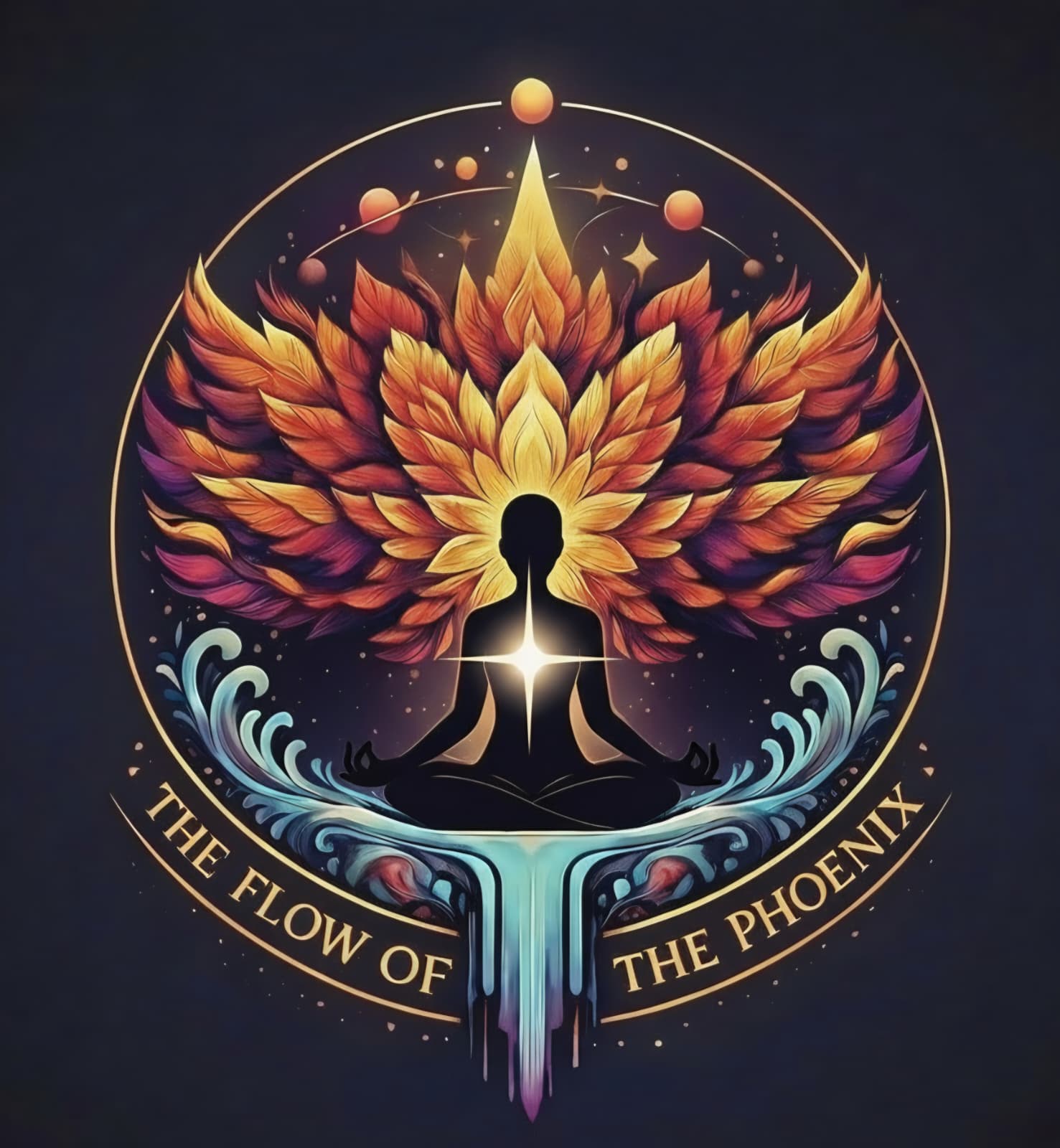
This name was not chosen as a brand or an aspiration. It was the most honest image I could find for what was actually happening in my own life: the accumulated cost of two decades of cross-cultural adaptation, the exhaustion of carrying multiple professional identities, the slow dissolution of a self that had been performing rather than inhabiting.
The phoenix does not escape the fire. It moves through the burning and emerges changed. That distinction is the whole practice. Most approaches to change are built around avoidance: manage the discomfort, minimize the disruption, outrun what hurts. This practice is built around something different: the willingness to stay present with what is actually happening, and to trust that the dissolution is not the end of the story.
What came through that fire was not a better version of what was there before. It was something more honest. More integrated. More mine.
The phoenix does not ask to be spared the fire. It asks to be present enough to move through it.
That is what this practice asks of the people who come to it. Not courage in the dramatic sense. Presence. The willingness to stay with what is true long enough for something new to become possible.
The full story of the name, its roots in Buddhist practice, Western alchemy, Kintsugi, and cross-cultural mythology, is told in a dedicated piece.
Read: The Phoenix SymbolThe craft doesn't stop at the edge of the frame.
Twenty years as a working actor is not a backstory. It is the proof of concept, and the practice is still ongoing. What the craft built was a particular way of being in a room: reading what is actually happening, staying with what is difficult, and knowing when to speak and when to let silence do the work.
These are not metaphors for coaching. They are the methodology.
View Full Artist Portfolio- How to stay in contact with what is actually happening in a conversation, not just what is being said.
- How to work with resistance without forcing it, meeting the moment rather than managing it.
- How to recognize when a client is performing their life rather than living it, and how to gently interrupt that pattern.
- How to use silence, pacing, and space as active tools, not gaps to fill.
- How to help someone locate the through-line in their own story when it has become fragmented or hard to read.
The work is available when you are ready.
A discovery call. No pressure, no performance. We talk about where you are and whether this is the right fit.
Lived first. Studied rigorously.
Certified Lumia Life Coach
ICF Accredited Program (Lumia Coaching)
Master Certified Transformational Coach
- ◆Master Life Coach
- ◆Master Mindset Coach
- ◆Master Wellness Coach
- ◆Master Transformation Coach
- ◆Master Spiritual Life Coach
Personal training, strength and conditioning, nutritional coaching, and holistic wellness consulting, a former practice that now lives directly inside the coaching work. The body, mind, and daily rhythm treated as one system.
Years of movement instruction and martial arts practice. Continues to study iaido. Focus, precision, presence under pressure, and discipline through repetition, woven directly into the coaching methodology.
Classically trained. BFA in Theater Performance, Baylor University. Grounded in Stanislavski, Uta Hagen, and Meisner technique: presence, emotional truth, and the discipline of genuine listening as the foundation of performance. Informed by Tadashi Suzuki's conviction that the actor's body is the primary instrument of truth.
Trauma-informed in orientation and practice. Grounded in somatic experiencing, nervous system regulation, and the principle that the body is where the work begins.
Five domains. One integrated life.
These are the five realms this practice draws from and tends. Body, mind, emotions, spirit, and creative expression are not stages you complete. They are domains you learn to hold, continuously, for the rest of your life.
Body
Somatic intelligence. Embodied presence. The body as instrument.
Mind
Cognitive reframing. Honest inquiry. Becoming less reactive.
Emotions
Emotional precision. Nervous system regulation. Capacity without collapse.
Spirit
Dharma practice. Virtue cultivation. Contemplative depth. Non-attachment.
Creative Expression
Story. Narrative coherence. The life as a work of craft.
Most approaches work in one domain and call it transformation.
A regulated nervous system without a meaningful narrative is just a calm person with no direction. A clear purpose without a regulated body is a vision that burns you out. Emotional intelligence without spiritual depth becomes self-management. Creative expression without integration becomes performance.
The five domains work together or they do not work at all. That is why this practice addresses all of them, in every container. Not as a curriculum to complete, but as a way of moving through a life. The work we do together builds the awareness. The life you build after carries it forward.
The lineage behind the practice.
No practice emerges from nowhere. This one is rooted in decades of study across Eastern contemplative traditions, Western performance science, somatic intelligence, and cross-cultural psychology. These are the teachers, thinkers, and traditions that shaped it.
Mahamudra, mind training, the nature of mind.
Staying present with discomfort. Radical compassion and the courage to remain open.
The luminous nature of awareness. Living and dying with presence.
The quiet discipline of returning, again and again, to what is actually here.
Contemplative depth integrated with aesthetic clarity and everyday presence.
Compassion as fierce presence, not rescue. Standing at the edge without falling.
Flow as a trainable neurological state, not a mystical accident.
The science of transcendence and what it actually means to become fully human.
The body keeps the score. Nervous system regulation as the foundation for everything else.
Emotion as the body's primary way of knowing, not interference.
The body's innate capacity to discharge stress and restore itself.
The drama triangle and the path toward relationships grounded in authenticity rather than unconscious role-play.
The healing power of emotional connection. Secure bonds as the mechanism that reshapes the nervous system from the inside out.
Foundational research on cross-cultural identity, belonging, and the ATCK experience.
The emotional and relational landscape of globally mobile lives across a lifetime.
Navigating cultural difference in communication, trust, and decision-making.
Ten distinct cultural lenses through which people perceive identity, belonging, and difference. Precision and care in cross-cultural complexity.
The multigenerational transmission of trauma and the insistence that healing is already present in the strengths a people developed to survive.
The relationship between vulnerability, shame, and wholehearted living.
Ikigai as a felt sense of a life worth living, not a productivity framework.
Holding impermanence, incompleteness, and complexity with grace.